Demolition and Plumbing Rough-In
The tub comes out. The drain location for a tub usually doesn't sit where a shower drain belongs, so a licensed plumber repositions the drain rough-in, often two to three feet over depending on the new layout. The shower mixer valve typically gets relocated higher up the wall, and we add proper shutoffs.
If you have an older home in Mineola or Lakeview, expect to find galvanized supply lines or cast-iron drain stacks behind the wall. We replace any of that we touch with copper or PEX (supply) and ABS (drain), so you don't end up with a leak six months after the reno.
Waterproofing: The Layer That Matters Most
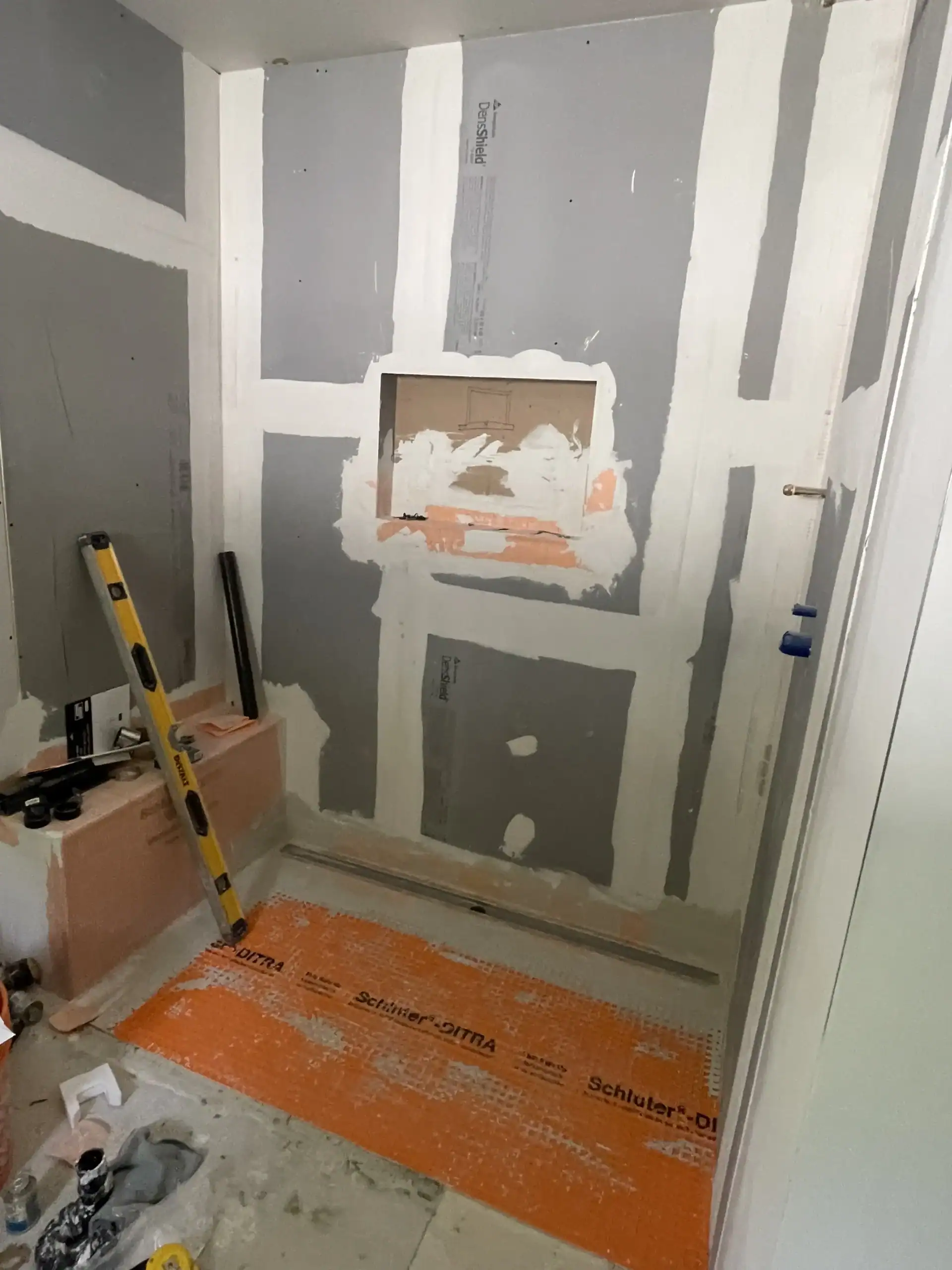
We never tile over drywall. For wet areas we use proper substrates designed for moisture: DenShield, cement board with a Schluter Kerdi membrane installed over it, GoBoard, and in some cases Wedi board. Every seam is sealed with Kerdi-Band waterproofing tape. The shower pan is either a pre-formed Schluter tray or a custom-poured mortar bed with Kerdi waterproofing on top. The result is a continuous, impermeable barrier behind your tile.
Tile and grout aren't waterproof on their own. The membrane is. This is the single most important detail in any tub-to-shower conversion, and it's where corner-cutting contractors quietly skip steps to save a day.
Tile, Grout, and Finish
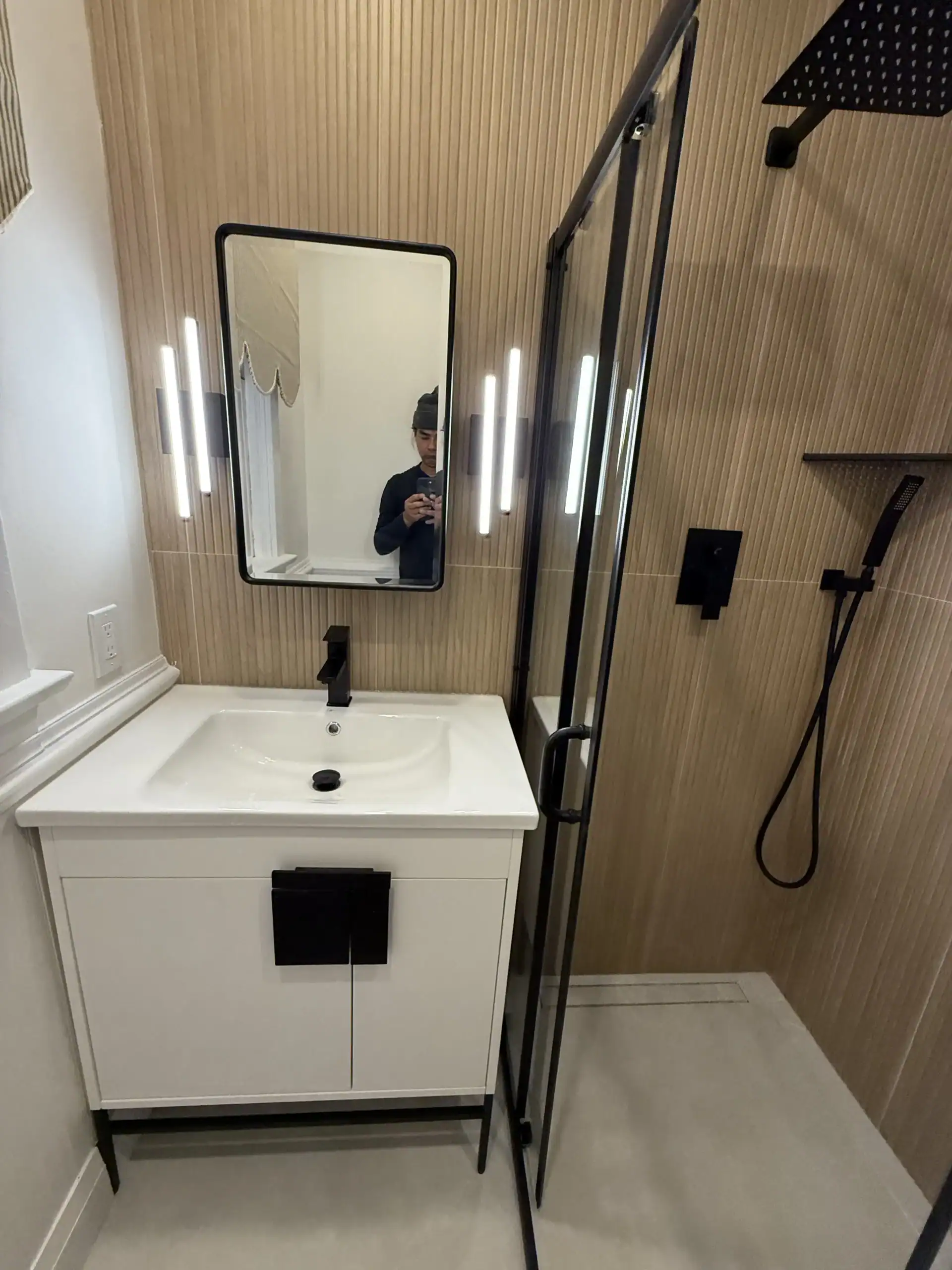
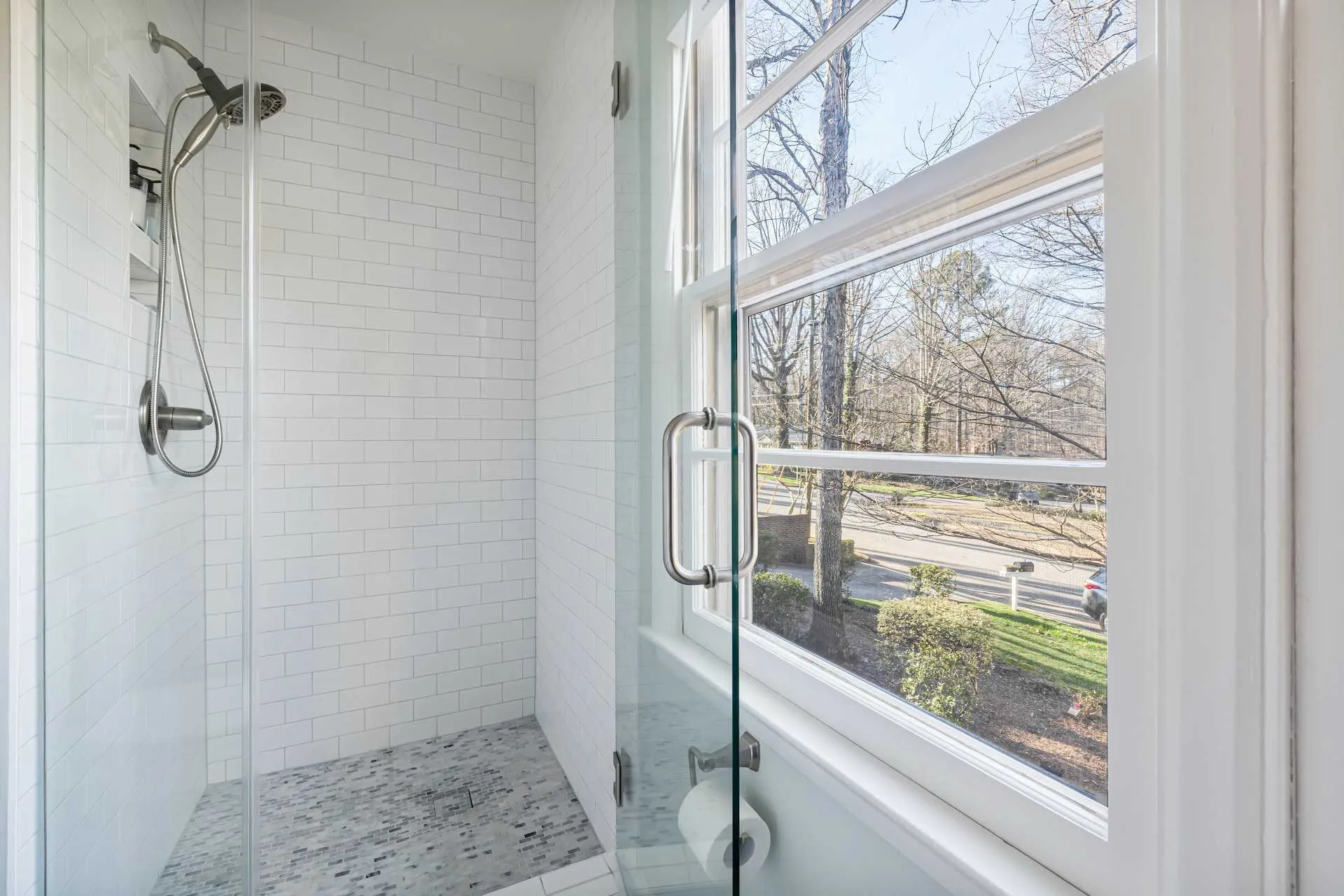
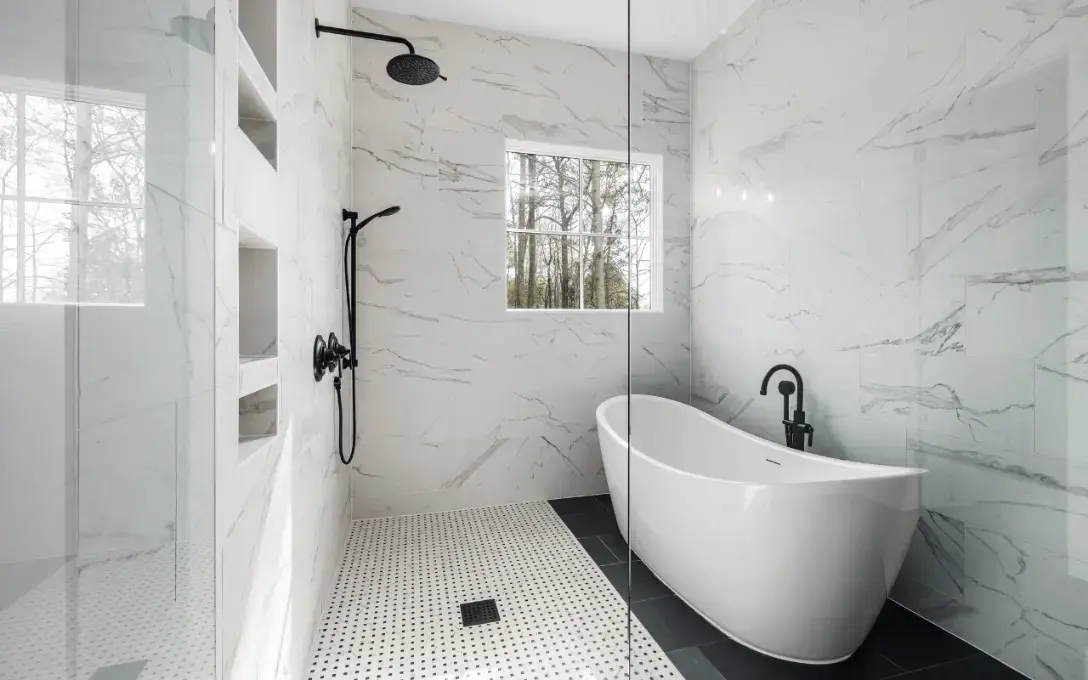
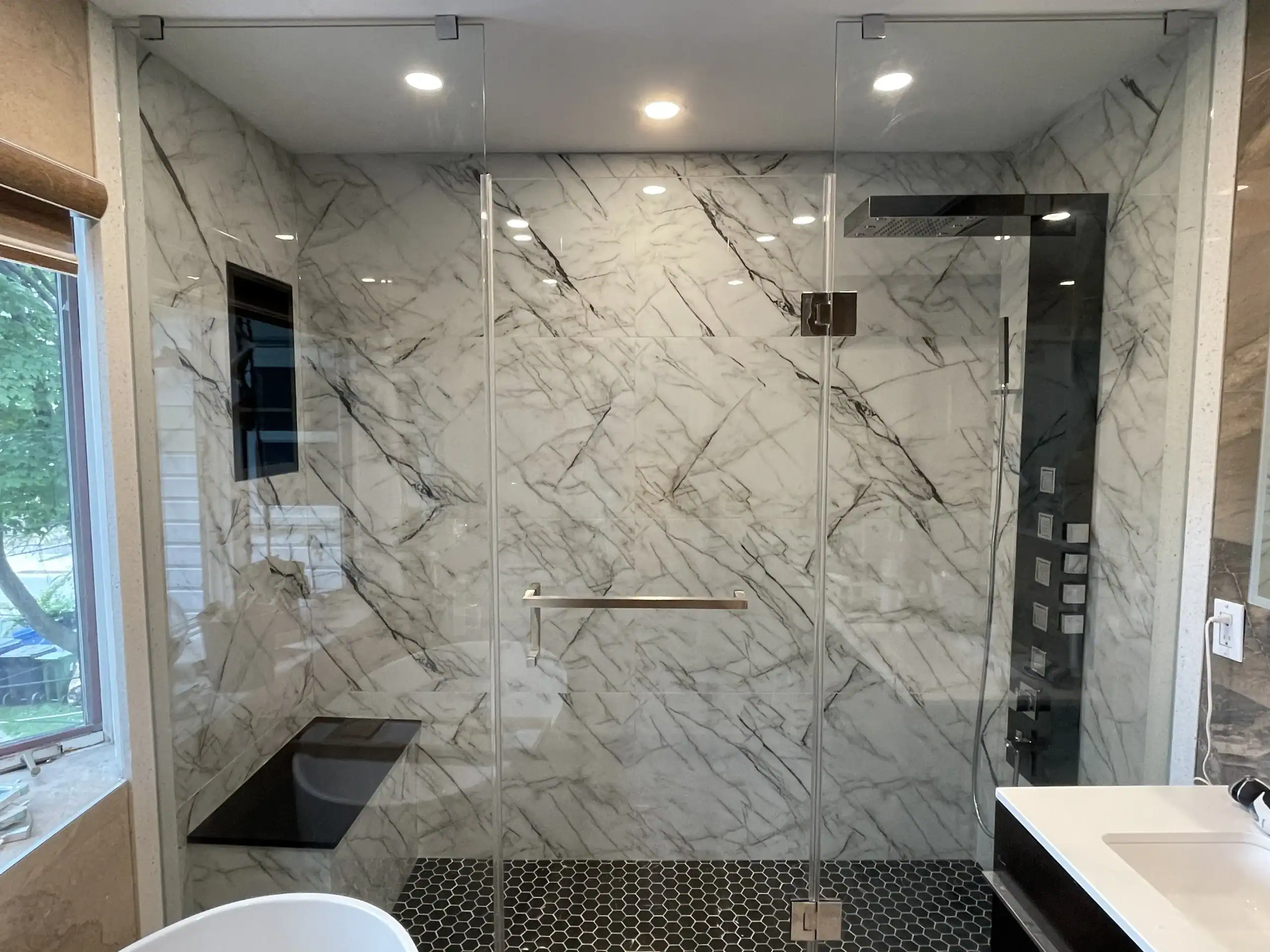
Once waterproofing is tested, tile installation begins. For most Mississauga residential conversions we use 12×24 or larger porcelain on the walls and a smaller mosaic or pebble for the shower floor (better grip, easier slope). We can also use any mosaic tile paired with Mapei Kerapoxy grout for a 100% watertight, long-lasting result. Niches for shampoo and soap get built into the wall framing during demo, then waterproofed and tiled with the rest.
For shower grout we use Mapei Kerapoxy, a stain-resistant epoxy grout. It costs more than cement grout and takes a bit longer to install, but it doesn't absorb water, doesn't stain from soap and shampoo, and never needs sealing. On a wet wall you want grout that performs as long as the tile does.
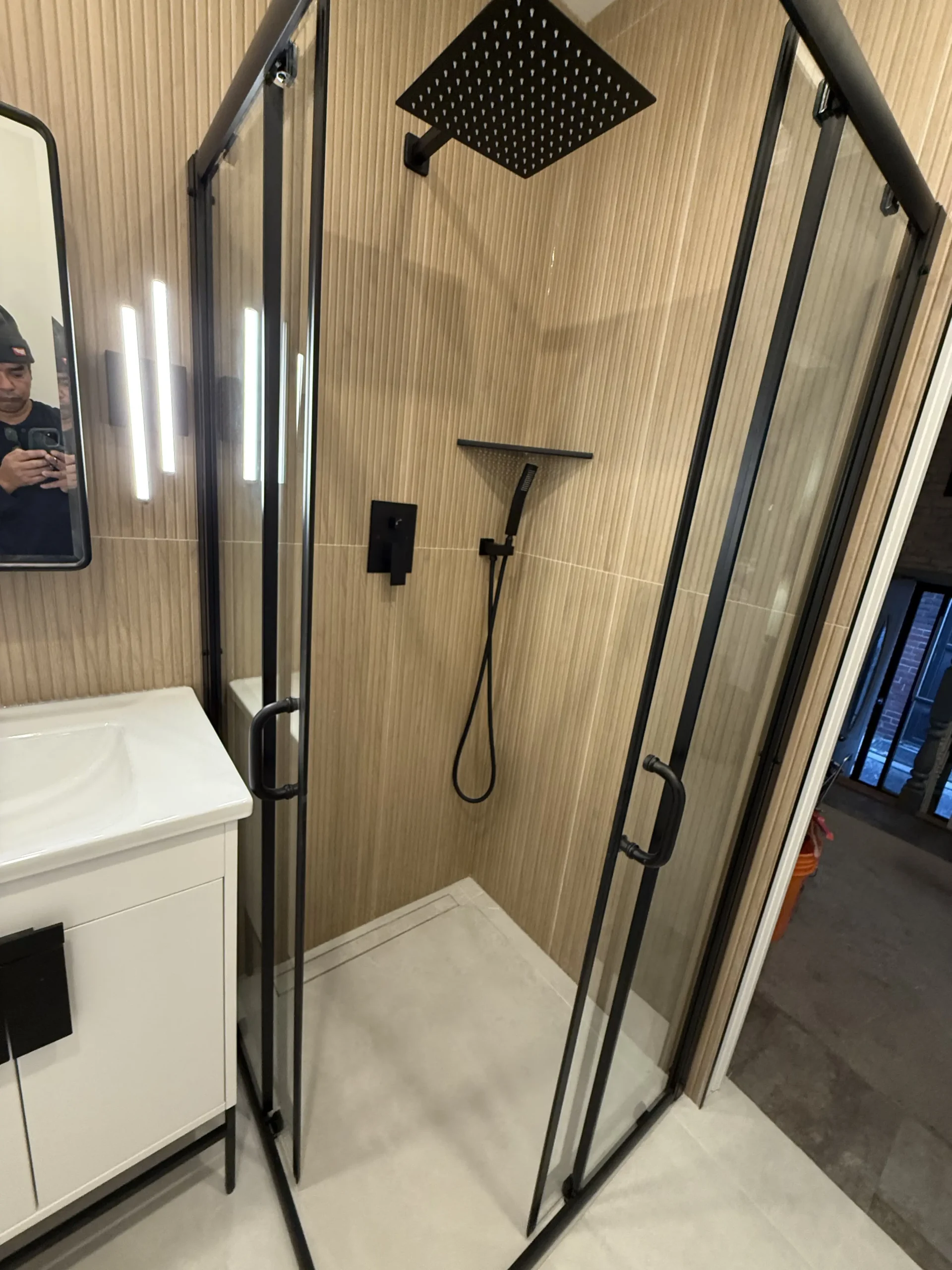
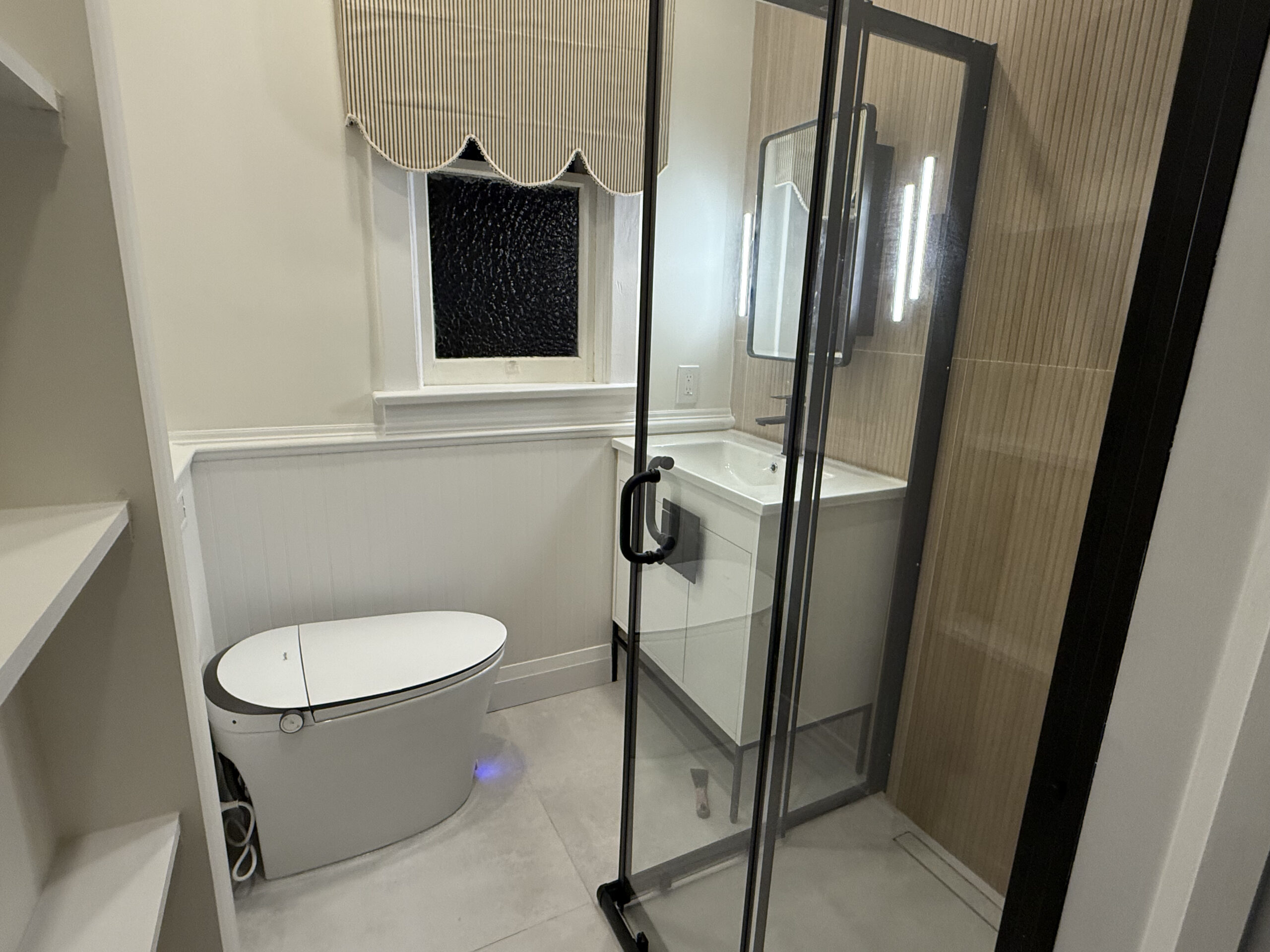
Glass enclosure goes in last, after tile cures. Frameless glass is the cleanest look. Semi-frameless costs a few hundred less and looks nearly identical. Fixed panel ("fixed-glass walk-in") is the most affordable and works well in tighter spaces.