Curbless entry, the foundation
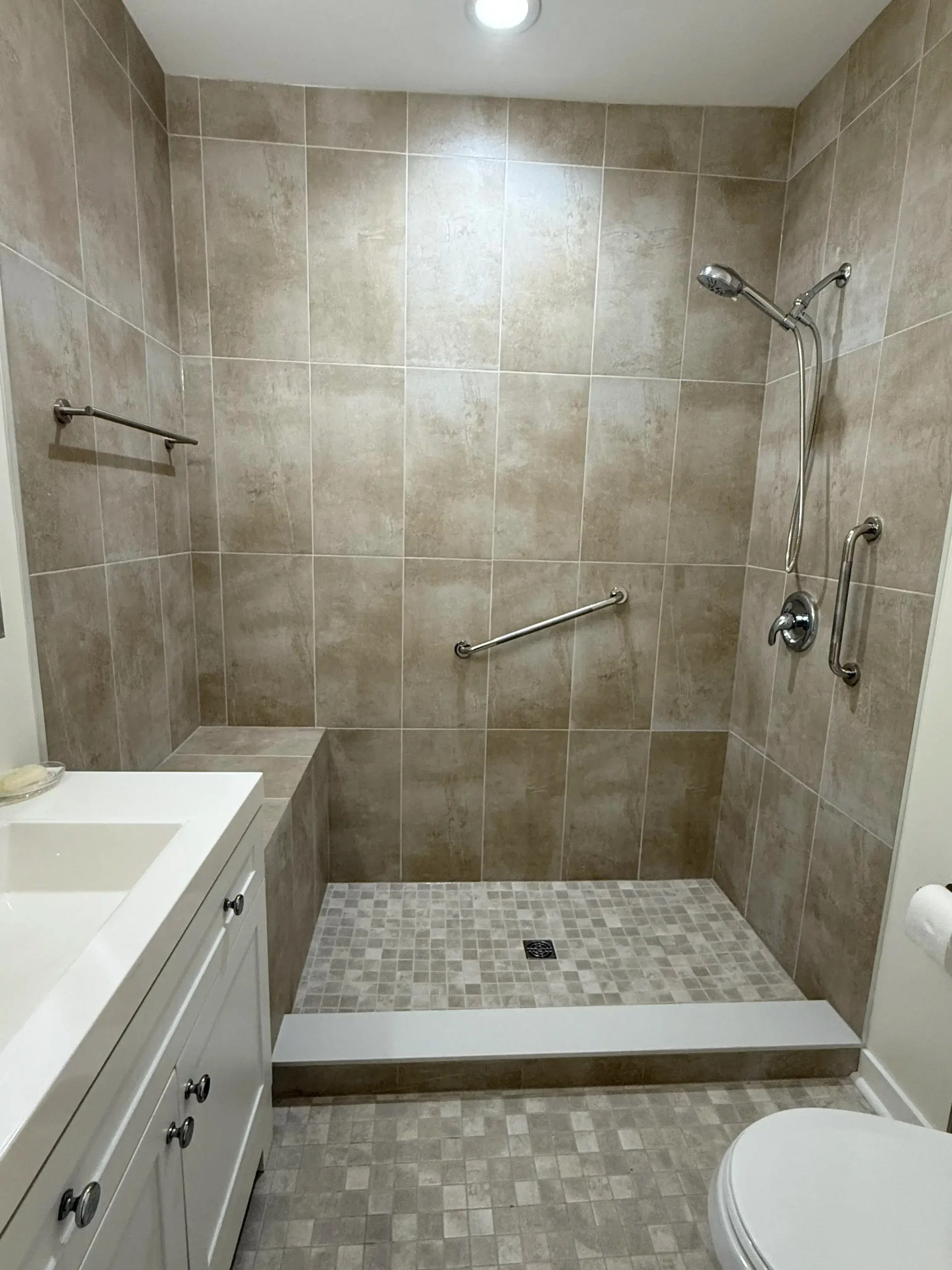
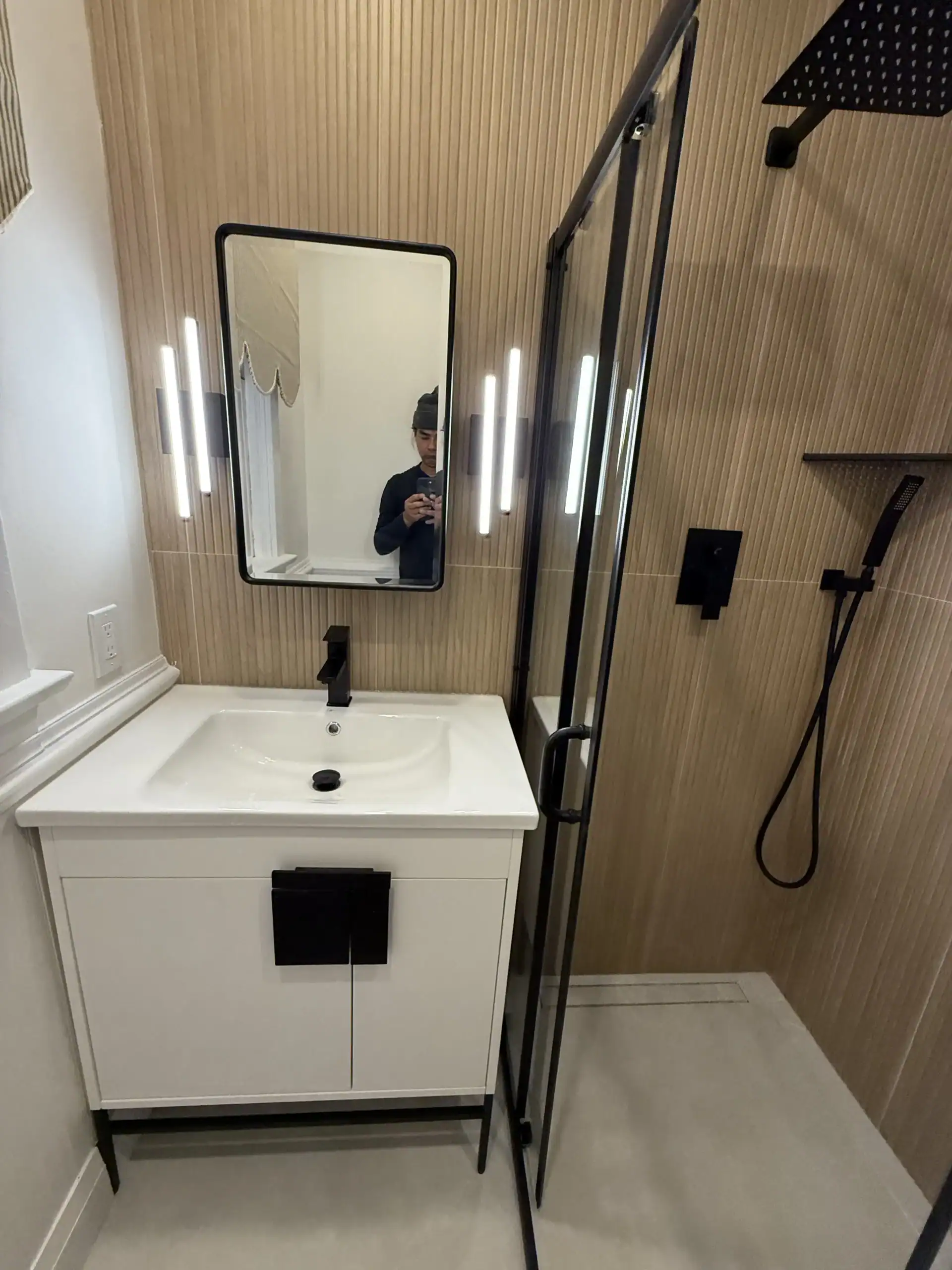
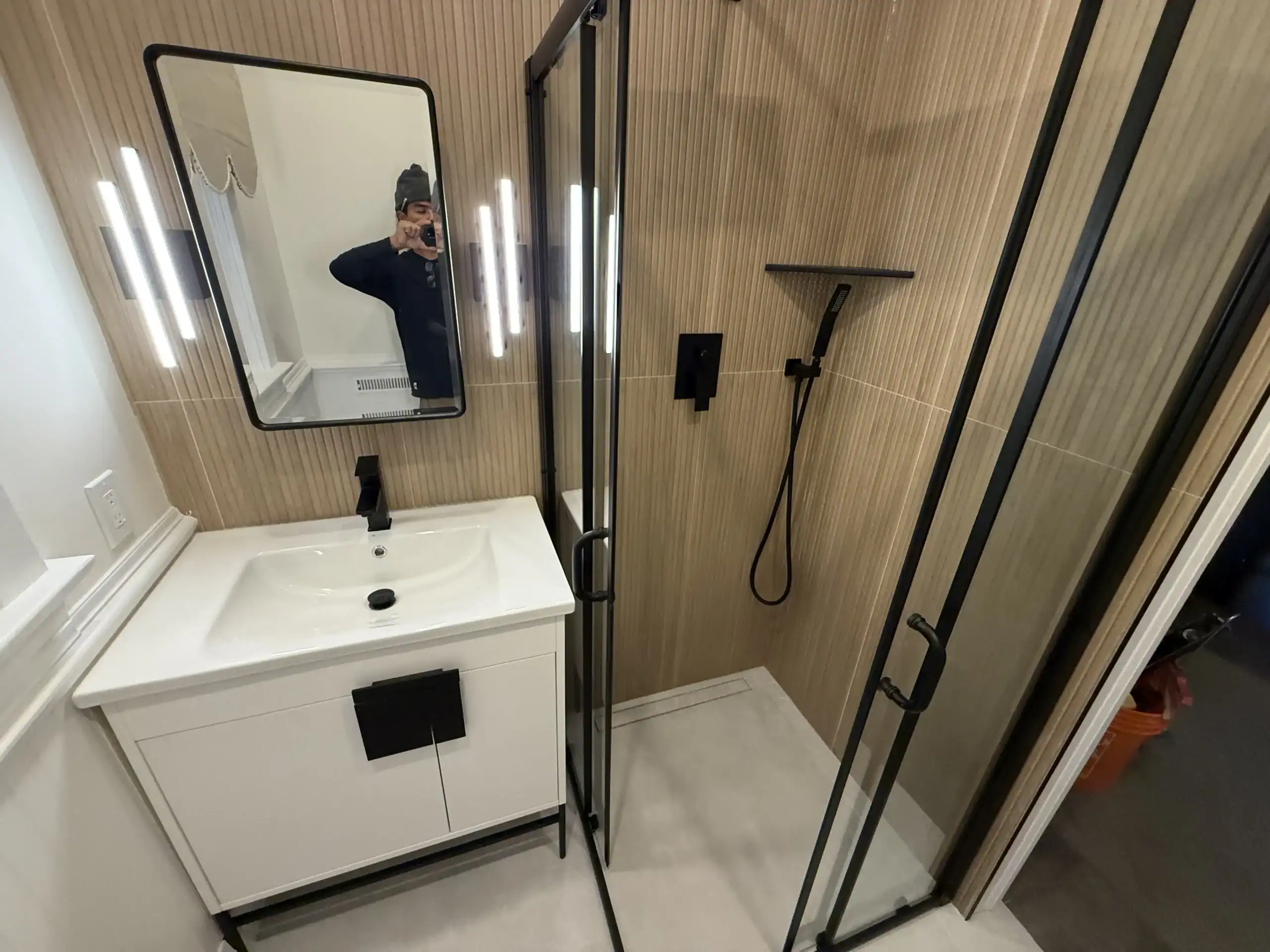
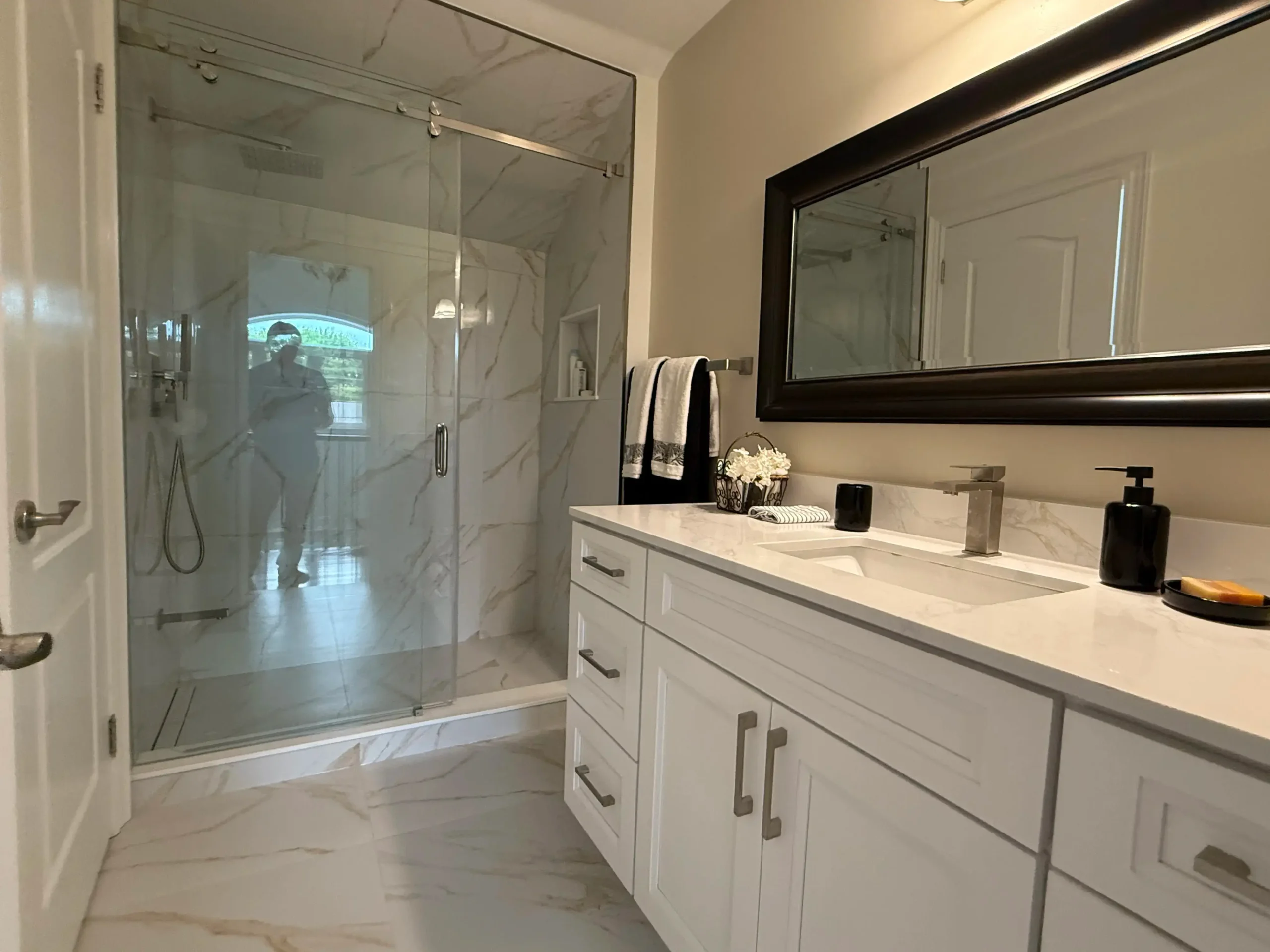
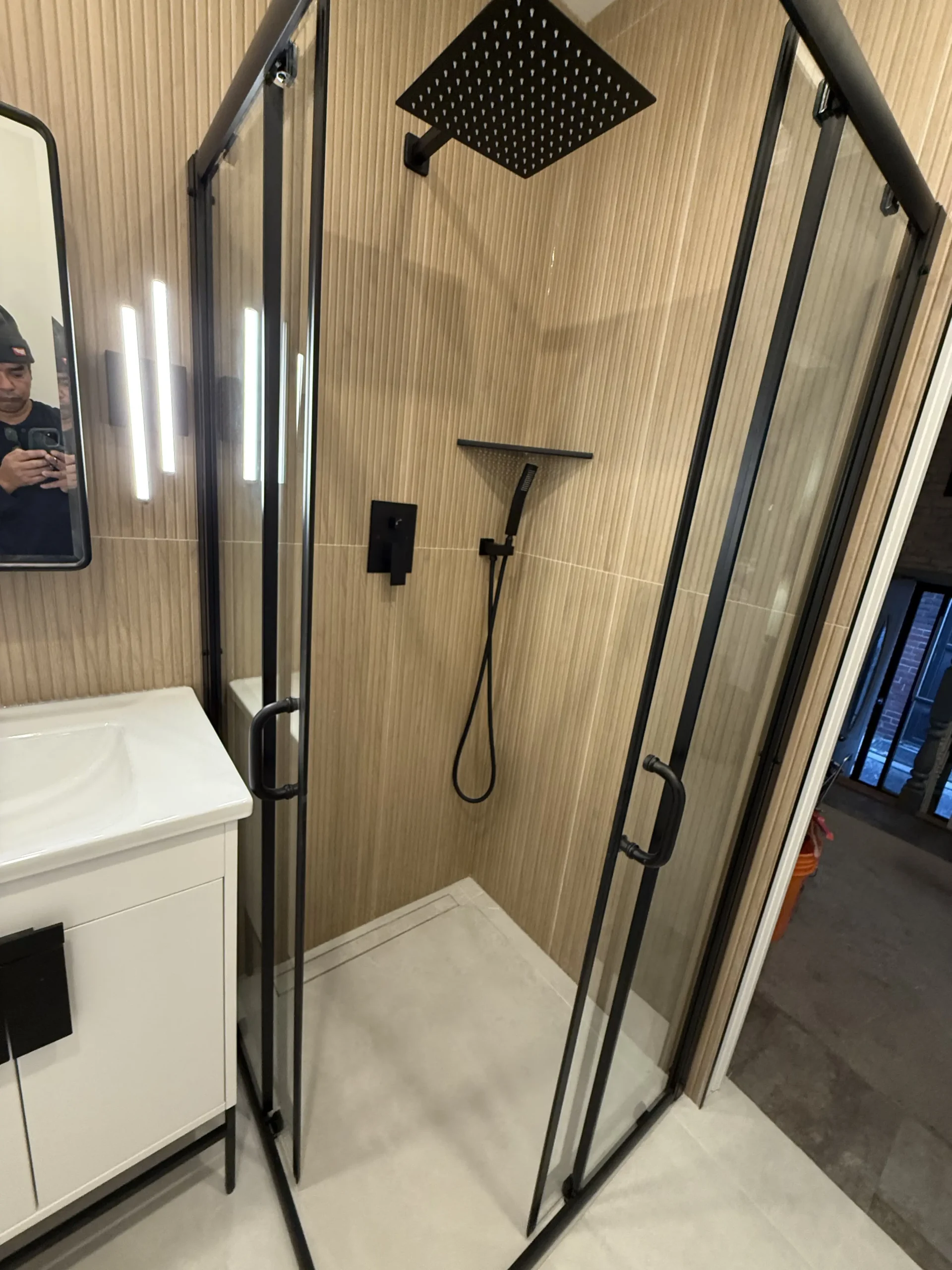
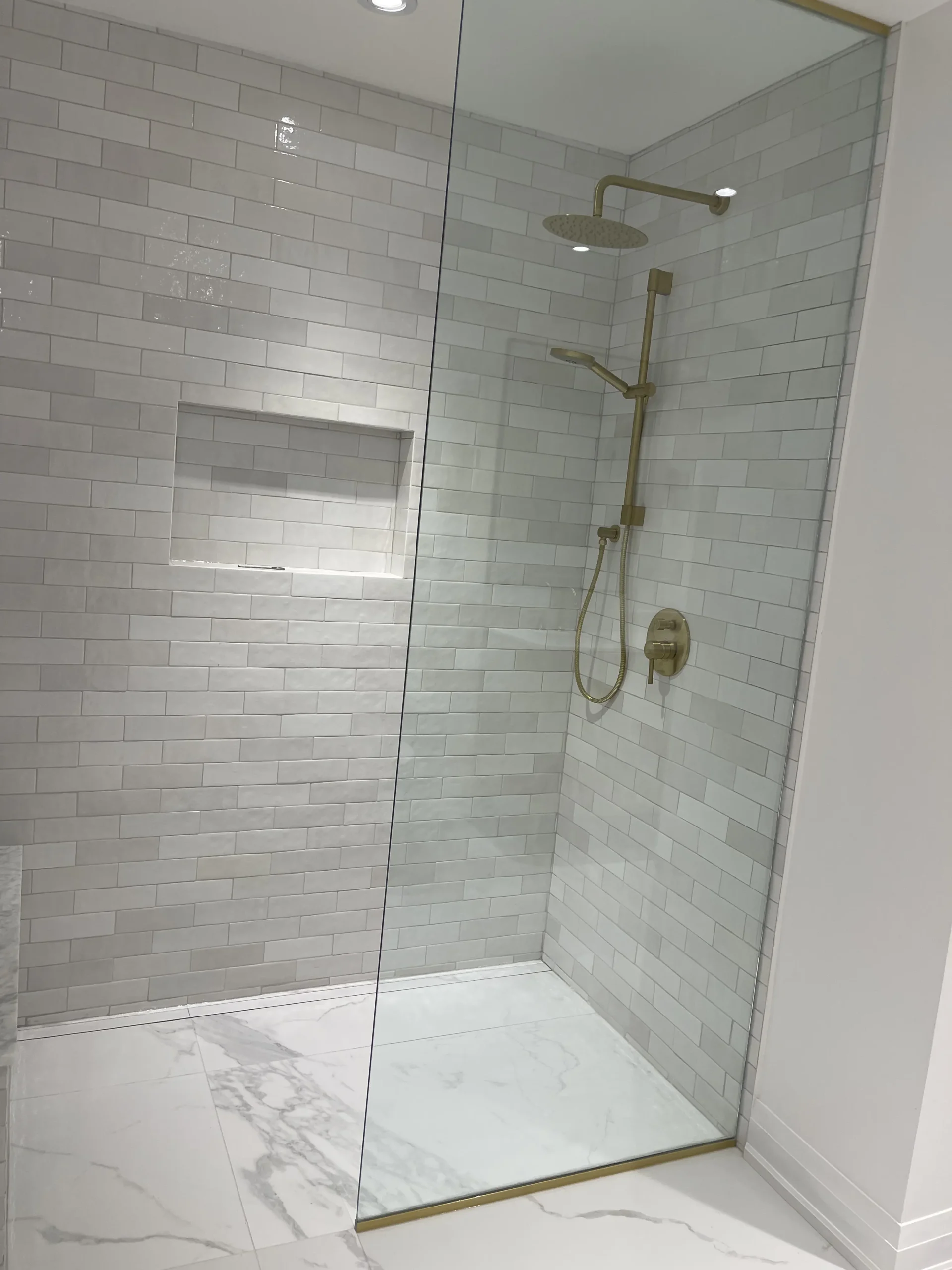
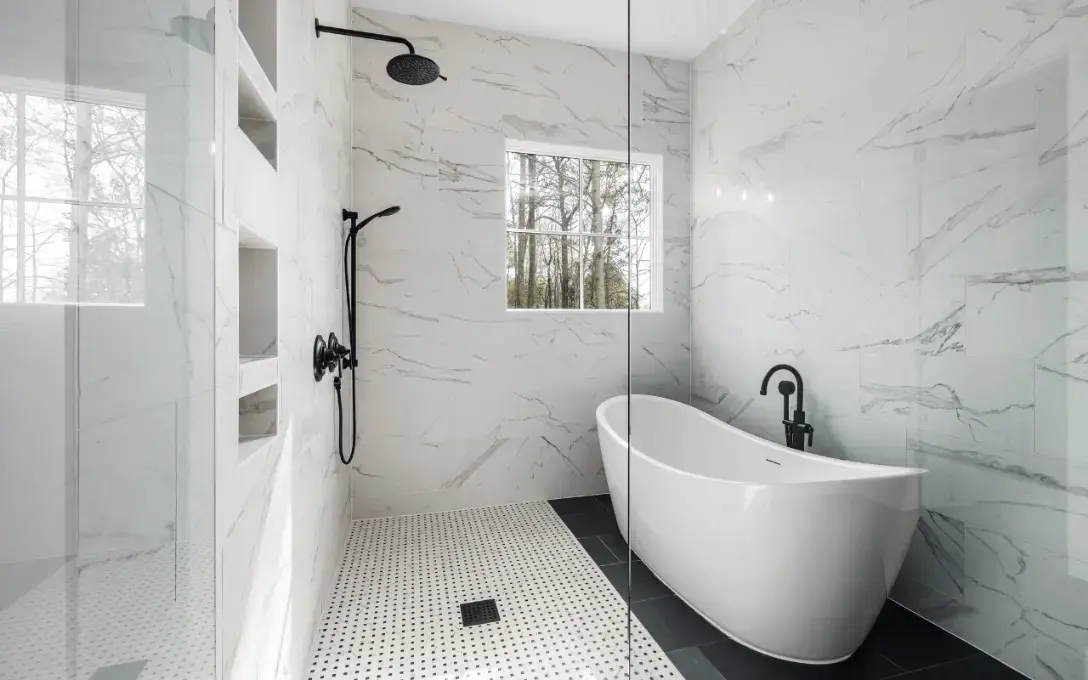
The single biggest accessibility upgrade in any bathroom is removing the shower curb. A flat threshold from bathroom floor into the shower works for someone in a wheelchair, someone with a walker, someone recovering from hip surgery, and anyone who's ever stubbed a toe in the dark. We achieve curbless by lowering the subfloor or building up the bathroom side, and slope to a linear drain along the back wall.
Curbless construction requires the same Schluter Kerdi waterproofing membrane we use on every shower, the same Mapei Kerapoxy grout, and the same standards of slope and drainage. Accessibility is not a finish, it's a build.
Grab bar blocking, even if you don't need it yet
This is the single smartest move for anyone planning ahead: solid 2x6 wood blocking inside the walls during framing, in every location a grab bar might eventually go. Inside the shower, beside the toilet, beside the tub if you keep one. Once tile is up, the blocking is invisible, but a grab bar can be screwed directly into solid wood whenever needed. No anchor hardware, no wall damage, no second renovation.
Adding blocking during framing costs almost nothing. Adding it later means tearing out tile. We do it as a standard on every accessible-design build, and we recommend it for every bathroom regardless of current need.
Tile benches and hand-held showers
A built-in tile bench at seating height (17" to 19" from the floor) lets someone sit while showering, lets a caregiver assist, and doubles as a place to set down shampoo and shaving supplies. Built into the wall framing during demo, waterproofed with Kerdi, and tiled to match the rest of the shower, it looks like a design feature, not a medical accommodation.
A hand-held shower head on a vertical slide bar lets the user adjust height for seated or standing use, and doubles as a normal shower for anyone in the household. Pair it with a thermostatic anti-scald mixing valve and you've solved both ergonomics and safety in one fixture.
The fixtures and the doorway
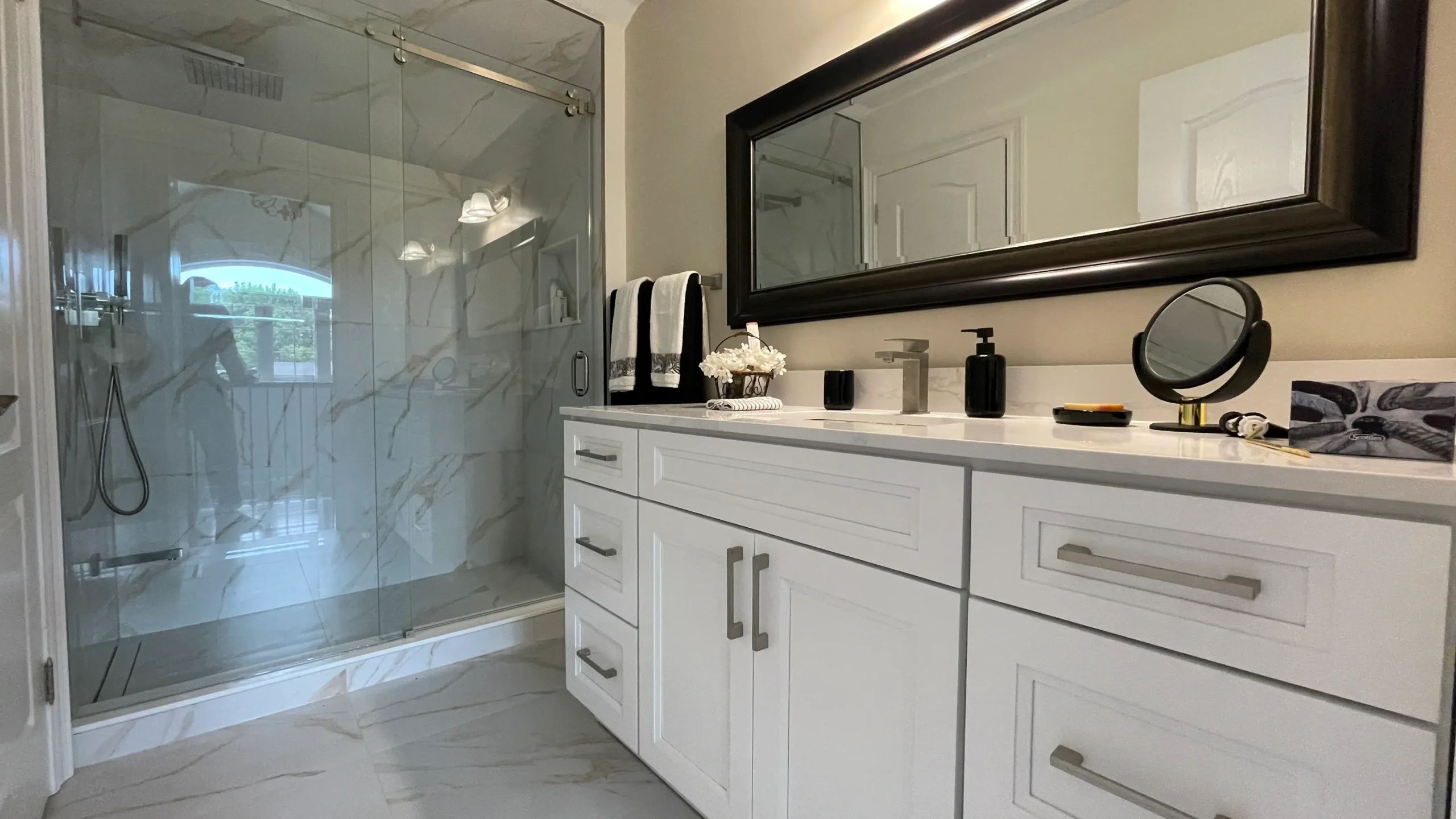
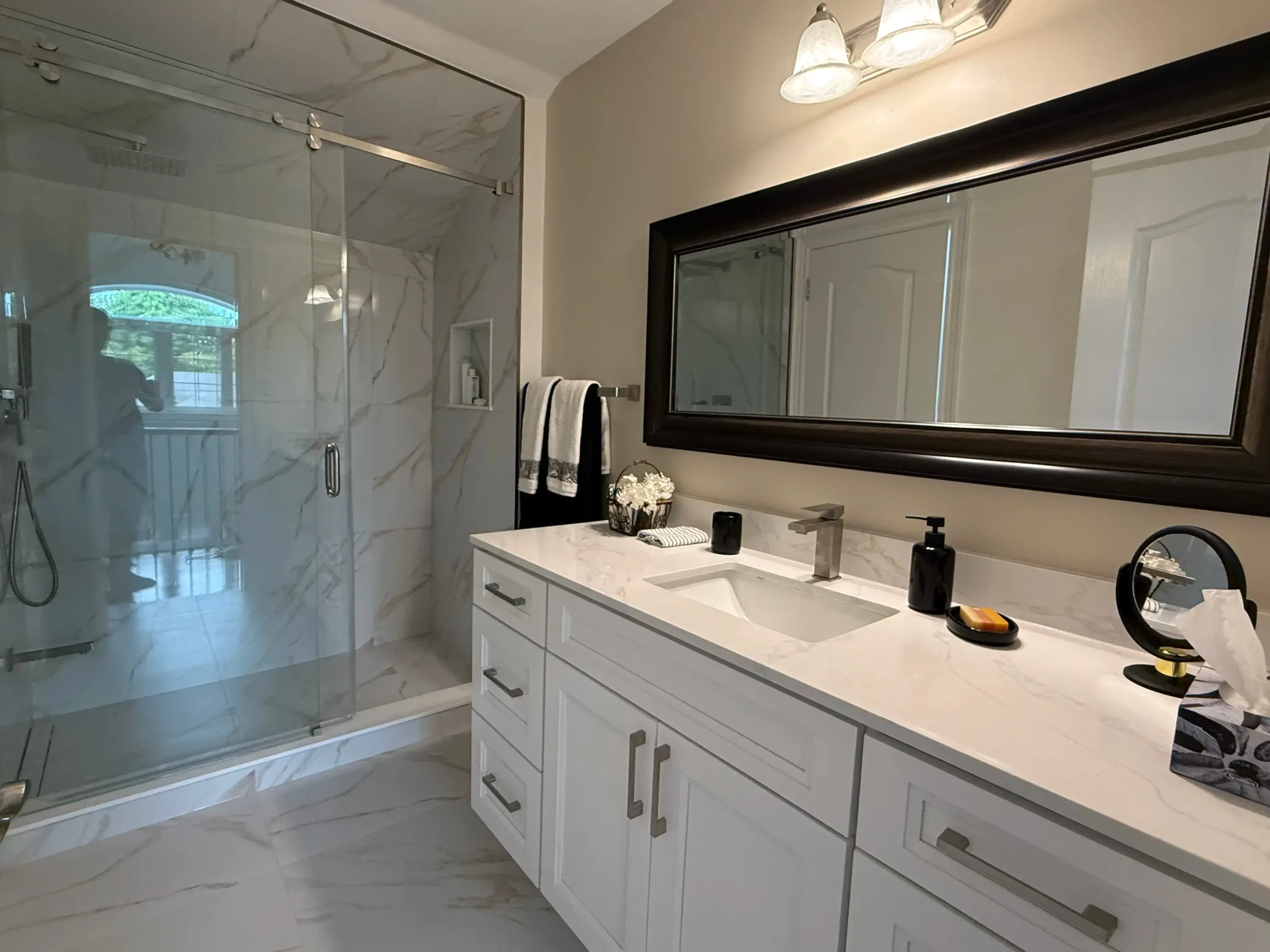
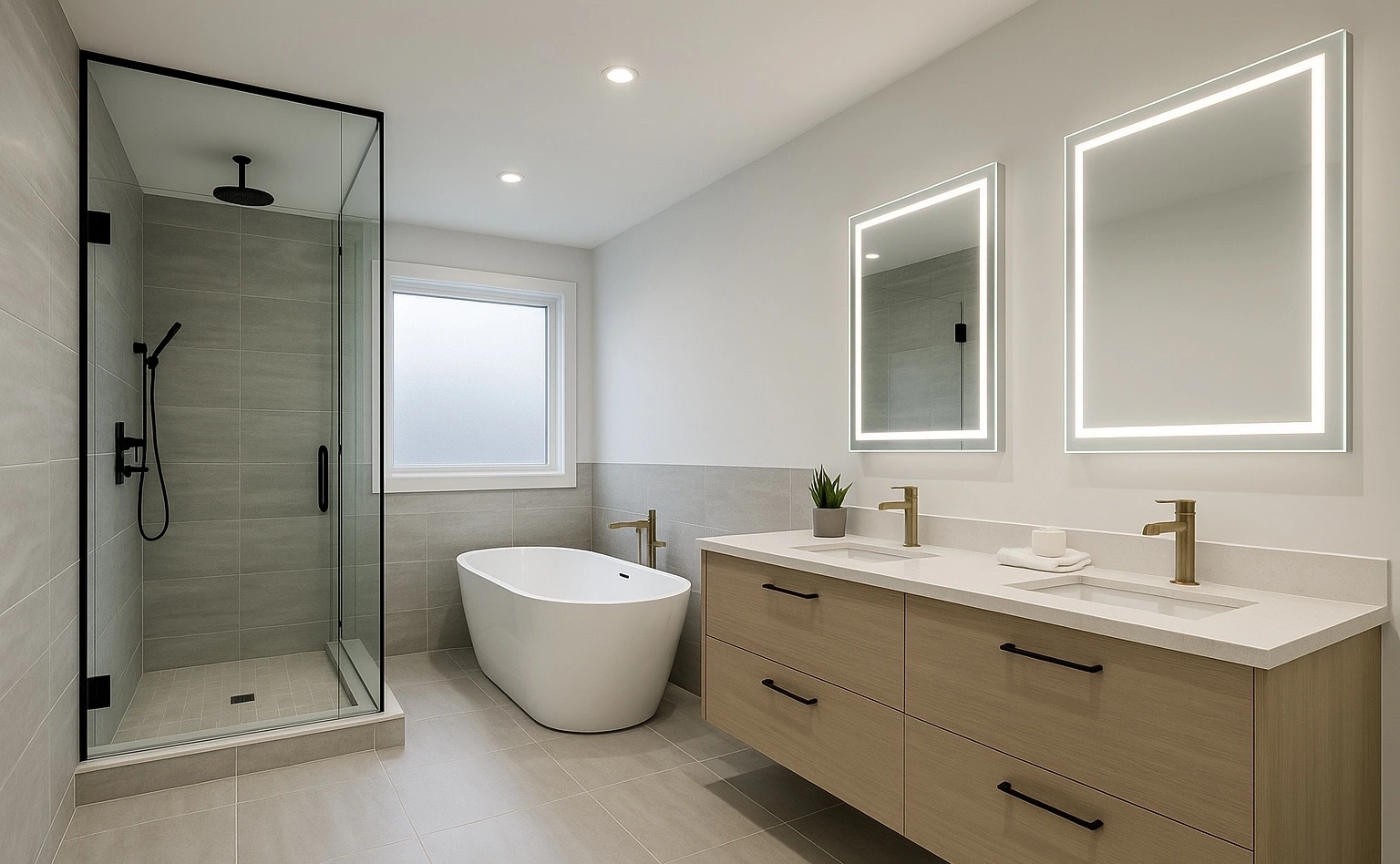
Lever-handle taps replace round knobs. They work for someone with arthritis, wet hands, or full hands. Comfort-height toilets (17" to 19" rim height versus the standard 14") are easier to sit down on and stand up from. Wider doorways (32" minimum, 36" preferred) accommodate walkers and wheelchairs. Wall-mounted vanities provide knee clearance for seated use and clear space underneath for mobility devices.
Lighting matters too. Bright, even, glare-free LED lighting on a dimmer reduces fall risk for users with reduced vision. We coordinate with our licensed electrician to upgrade the circuit and install proper task lighting at the vanity and overhead in the shower.